
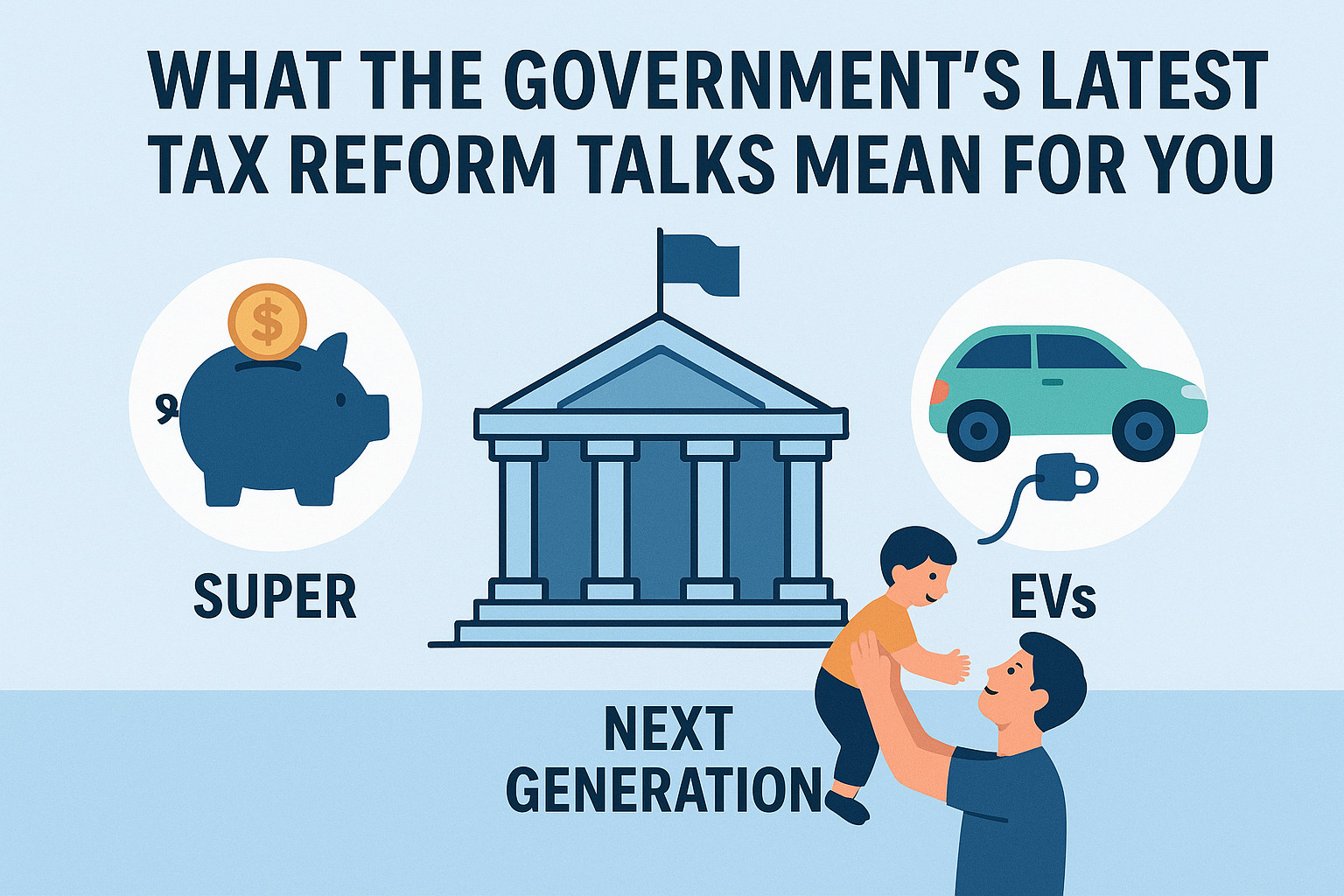
What the Government’s Latest Tax Reform Talks Mean for You: Super, EVs, and the Next Generation
Australia’s tax system could be heading for its biggest shake-up in years. This week, Treasurer Jim Chalmers hinted that reforms to superannuation, wealth taxes, and company taxes may be on the horizon — all in the name of making the system “fairer” for future generations.
But what does that really mean for everyday Australians?
Why These Reforms Are Happening Now
At the government’s recent Economic Reform Roundtable, leaders from business, unions, and policy think tanks met to discuss how to lift Australia’s productivity and improve the tax system. While no firm decisions were made, several key themes emerged.
Treasurer Chalmers made it clear that the current system puts too much of the tax burden on younger Australians, while older and wealthier Australians often benefit from generous concessions — particularly in superannuation and trusts.
“Our tax system is imperfect,” Chalmers said, “and one of its most troubling imperfections is best seen through an intergenerational lens.”
What Tax Changes Are on the Table?
Here are the potential reforms the government is considering:
1. Superannuation Tax Changes
- Possible changes: Higher taxes on very large super balances (over $3 million) and performance tests to make funds more accountable.
- Why it matters: The government wants to stop super from being used as a tax shelter for the wealthy rather than as a retirement savings tool.
2. Wealth Taxes
- Targeting capital gains tax discounts and family trusts, which can be used by wealthier Australians to lower their effective tax rates.
- Goal: To reduce the burden on workers and shift some of it to higher-net-worth individuals.
3. Company Tax Reform
- Proposal: A lower 20% tax rate for companies earning under $1 billion, but a new 5% tax on business cash flow for all companies.
- Impact: Could encourage investment by smaller businesses, but large businesses (especially banks and miners) may end up paying more.
Road-User Charges for Electric Vehicles (EVs)
As more Australians switch to electric vehicles, the government is looking for ways to replace lost fuel excise revenue. One option is a kilometre-based road-user charge.
- NSW’s plan: Introduce this charge in 2027 or when EVs make up 30% of new car sales.
- National plan: Still under discussion, with a meeting planned in September.
Housing, AI, and Productivity
Beyond tax reform, the Roundtable set 10 priority areas for driving productivity. These include:
- Speeding up housing approvals
- Removing outdated tariffs
- Reforming environmental regulations
- Making AI a national priority
- Attracting investment
- Improving workforce skills
Will Income Taxes Be Cut?
There’s tension here.
Chalmers says reforms could be used to make the system “fairer” and may include income tax cuts. But ACTU secretary Sally McManus has warned against reducing income tax if it means less money for public services like Medicare and education.
“We don’t think cutting taxes for everyone leads to better quality of life,” she said. “People don’t mind paying tax if it delivers essential services.”
When Will These Changes Happen?
For now, the government has committed only to tax measures it took to the last election, such as:
- Stage 3 income tax cuts (modified version)
- EV road-user charge
- Extra 15% tax on super balances over $3 million
New reforms, including any broader changes to super or company tax, may be put to voters at the next federal election in 2028 — or possibly earlier.
Final Thoughts: What It Means for You
This isn’t just political theatre — the way Australia funds its services, supports its ageing population, and grows its economy is under serious review.
If you:
- Own a large super balance
- Operate a business
- Drive (or plan to drive) an EV
- Use family trusts
- Or just want better public services…
…these reforms could affect your wallet.
The conversation is just beginning, but one thing is clear: the tax system of the future may look very different from today.

About Lan Nguyen
Lan is the Founder and Chief Strategist at Success Accounting Group, Melbourne based CA firm. In a matter of short 8 years she has built up a reputable Chartered accounting firm with 3 offices and a team of 6 professional accountants and support team members. Her mission is to provide Innovative and Strategic Financial advice to help her customers make smarter financial decisions today for a brighter future.
Success Accounting Group is for established business owners who would like help to grow a sustained business. As a business owner you understand what drives your business success with our accounting team taking care of the rest.

Success and Wealth


Success Accounting Group Pty Ltd
Oakleigh, VIC, 3166